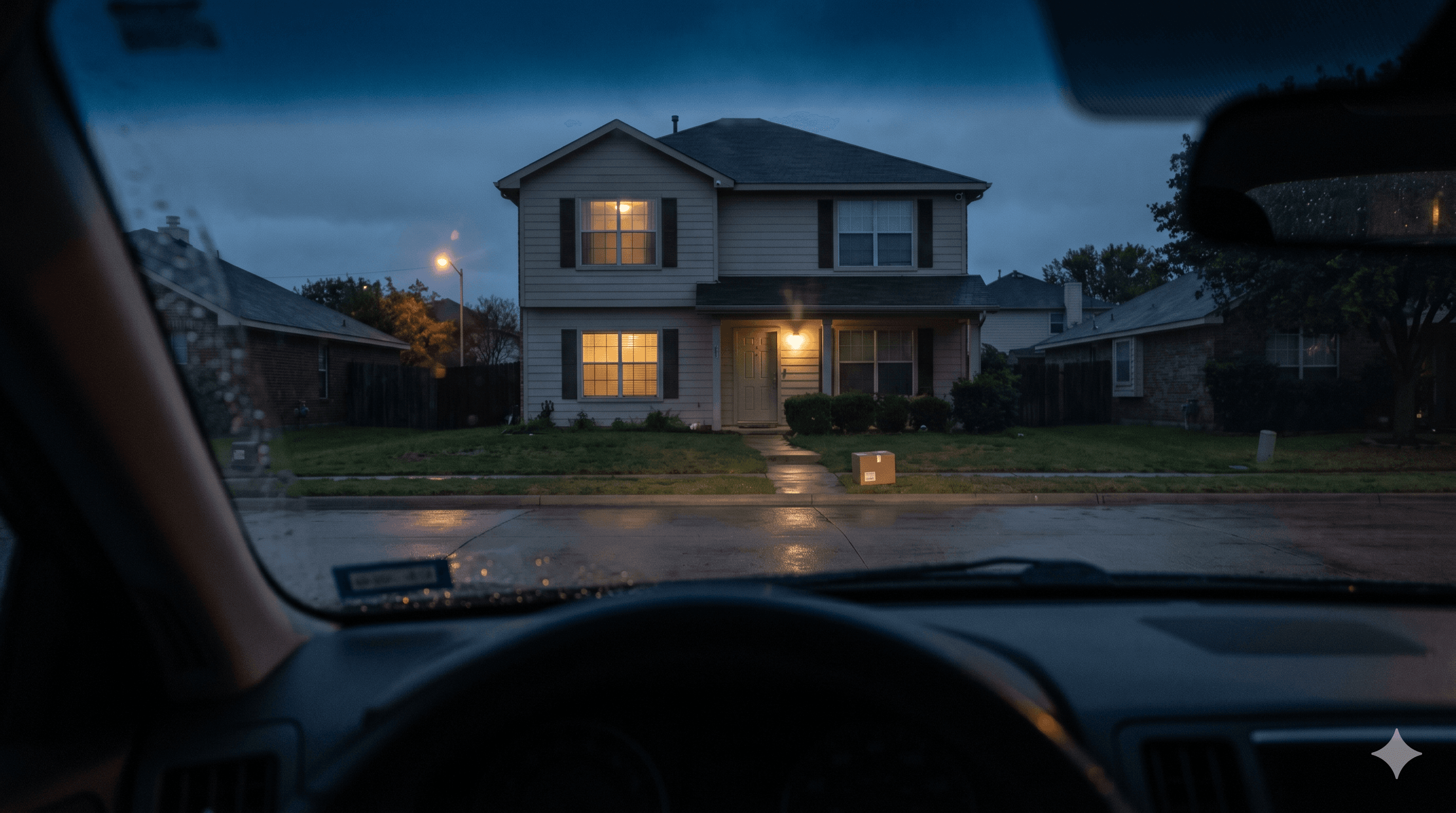
Before any door gets kicked, before any glass-break sensor trips, before your dog ever lifts his head off the rug, somebody has been watching. He drove past on Tuesday at 7:15 a.m. He saw the garage door go up at 7:18 and the F-250 pull out at 7:22. He noticed the gun-club sticker on the back glass and the "Don't Tread on Me" plate frame. He saw the corrugated box for a 1,200-pound gun safe broken down at the curb on trash day. He read your wife's Instagram story from the Cabo airport. By the time he picked your house, he wasn't guessing. He was confirming.
This is the layer of home defense almost nobody talks about. Hardware companies don't sell it because there's nothing to ship. Alarm dealers don't sell it because it doesn't carry a monthly fee. But every prepper, every counter-custody instructor, every serious home-defense thinker from John Mosby at Mountain Guerrilla to Ed Calderon on the criminal-mindset side of the house has been screaming about it for two decades. It's called OPSEC — operational security — and it's the gray-man doctrine applied to your residence. The goal isn't to be invisible. The goal is to be boring. To be the house the bad guy drives past because the house next door is louder, easier, and signals more reward.
For the layered-defense framework this fits inside, see Echelons of Defense: Layered Home Security. OPSEC is the deny-detection echelon — everything that happens before deter, delay, or defeat. If the attacker never picks your house in the first place, every other system on the property gets to stay quiet.
In this article
- OPSEC for Homeowners: What Your House Is Telling Strangers
- The Reconnaissance Phase You Don't See
- What Your Trash and Recycling Are Telling People
- What Your Social Media Is Broadcasting
- What Your House's Exterior Is Signaling
- Camera Placement OPSEC
- Delivery-Driver OPSEC
- The "Protected by X" Sign Paradox
- EMCON for the Truly Serious
- OPSEC Spec Checklist
- The Mindset
The Reconnaissance Phase You Don't See
The University of North Carolina at Charlotte's Department of Criminal Justice and Criminology surveyed roughly 422 incarcerated burglars in 2012–2013 and asked them flatly: how do you pick a house? The findings, published as "Through the Eyes of a Burglar", became the most-cited target-selection data in the industry. About 83% said they would try to determine if an alarm was present before attempting entry. Roughly 60% said an alarm would send them to a different target entirely. Outdoor cameras and visible surveillance ranked among the top deterrents alongside dogs and audible occupancy cues. Average residential burglary completion time: under ten minutes from breach to exit.
What the study makes clear — and what Greg Ellifritz at Active Response Training has been hammering on for years — is that the burglar is reading your house like a sniper reads a hide. He's looking for occupancy cues, escape routes, witness density, and signaling about reward. Pre-attack indicators (PIDs) for residential targets aren't subtle: a stranger walking the property line "looking for a lost dog," a vehicle that drives past three times in twenty minutes, a clipboard guy claiming to be from the gas company, a food-delivery driver with no food. For the doctrine on those tells, see Pre-Attack Indicators: Reading Camera Footage Like You're Casing Your Own House.
The FBI's January 2025 bulletin to professional sports leagues spelled out the operational pattern in plain English. Organized theft crews "conduct physical and technical surveillance," monitor "publicly available information and social media to identify a pattern of life," and pose as "food delivery persons, lawncare workers, or mechanics/repairmen" to case homes before the actual burglary. CNN's coverage of the FBI bulletin notes that crews bring Wi-Fi jammers, ghillie suits, and second-story entry tools because they've already mapped the residence's signal envelope and sensor coverage. The professional athletes were the canaries. The methods are migrating downstream to anyone whose social footprint advertises reward.
What Your Trash and Recycling Are Telling People
Trash day is open-source intelligence day for whoever's casing your block. Set out the wrong cardboard and you've published an inventory of your living room. Some of the loudest signals:
- The corrugated box for a 60-inch OLED television leaning against the bin.
- The Liberty, Browning, or Fort Knox safe carton — the brand is printed on the side in 8-inch letters, and the model code tells the bad guy what UL rating he's defeating.
- Amazon boxes with the order number visible (yes, that string maps to a specific SKU and address).
- Empty cases of Caymus, Opus One, or anything else with a price tag past $80 a bottle.
- Prescription bottles with full name and street address on the label.
- Pre-approved credit-card mailers and bank statements with full names.
Solution: Break boxes down inside the garage and stuff them into opaque contractor bags. Shred prescription labels and any mail with names. Set the bin out on bin-day morning, not the night before, and bring it back in the same day. If you just took delivery of a safe, drive the carton to a commercial dumpster. The point is not paranoia — it's denying free intelligence to someone who's actively looking for it.
What Your Social Media Is Broadcasting
In Fontana, California, a family posted from their Las Vegas hotel that they'd just arrived. A friend of their daughter asked when they'd be home. Three suspects pulled a U-Haul into the driveway at 3:30 a.m. and started loading televisions, beds, sofas, and artwork. The only reason the family got their stuff back is that Fontana PD happened to be running surveillance on the block for an unrelated string of burglaries and rolled up mid-load. ABC7 Los Angeles covered the case; the homeowner's quote — "we didn't have a clue until we got a call the next morning from the police inside my house" — should be tattooed on every teenager's phone.
Social-media OPSEC for the household:
- Post from home, never live. Cabo photos go up after wheels-down at your home airport, not from the resort lobby. This single rule defeats most opportunistic vacation burglary.
- Kill geotagging. iOS and Android both embed GPS in photo EXIF by default. Strip it, or shoot with location off.
- No range-day photos with the house in the background. The driveway, the garage door, the front-yard tree are all reverse-image searchable. A photo of your AR on the workbench with a window in frame can identify your street.
- Lock down the family. Your teenager's TikTok is your weakest link. The school in the background of her cheer photo, the pickup-line routine in her stories, the open-house photo of her bedroom — all of it is intelligence. OPSEC-train every member of the household, especially the ones who post most.
- Don't post the gear list. When you DIY-install cameras, the wiring-diagram screenshot for the Reddit post shows your panel make, model, and firmware. Don't post wiring runs, don't post safe brands, don't post alarm panel photos.
Massad Ayoob has been teaching for forty years that the criminal selects the victim, not the other way around — and the modern selection process happens in your follower list. Ed Calderon's counter-custody curriculum at Manifesto MFG starts from the same premise on the body: don't carry an obvious wallet, don't wear obvious watches, don't broadcast capability. The same rules apply to a house.
What Your House's Exterior Is Signaling
Walk to the curb and look back at your own front yard like you're a stranger. What does this house tell you?
- Stickers and flags. Gun-rights, gun-club, NRA, manufacturer, and shooting-team decals on the truck or the front window are honest expression — and also a billboard that says "firearms are stored at this address." This is genuinely controversial in our community, and we're not telling anybody to take their flag down. But the data is real: the Council on Criminal Justice's Trends in Gun Theft analysis found roughly 65,000 gun theft incidents reported annually from 2018–2022, residences remained the most common theft location, and over $314 million in firearms were stolen in that five-year window. Burglars who specialize in gun theft read stickers. Choose your signaling deliberately.
- Brand-specific alarm signs. A "Protected by Ring" sign tells the casing burglar exactly which platform to defeat — which Wi-Fi jammer frequency, which siren tone, which app vulnerability. UNC Charlotte's data says the sign deters about 60% regardless. The other 40% are the ones who studied. A generic "24-hour monitored alarm system" sign deters the first group without educating the second. See Alarm Yard Signs: Do They Actually Deter Burglars? for the full nuance.
- Mail and packages. Three days of newspapers, a stuffed mailbox, packages stacked at the door — that's a vacancy advertisement. Suspend mail at usps.com and use a hold or a trusted neighbor.
- Lighting that signals routine. Lights all-on at midnight or all-off at 9 p.m. both flag absence. Vary it. Dusk-to-dawn exterior lighting, plus interior lights on randomized smart-switch schedules. Tactical Exterior Lighting covers the area-denial side of this.
Camera Placement OPSEC
Visible cameras deter — that's the UNC Charlotte finding. But cameras placed only at the obvious points (front door, garage door) tell a thinking attacker exactly where the dead spaces are. The fix is a deliberate two-tier camera plan:
- Visible deterrent layer. Front porch, garage face, side gates — obvious, well-lit, under-the-eave so they can't be knocked down with a stick. These exist to be seen.
- Discreet coverage layer. Small PoE cameras (think Reolink, Amcrest, or NDAA-compliant alternatives in 4MP turret form factors) covering the dead spaces — back fence line, AC compressor approach, side yard between the trash bins and the gate. These exist to record. They're NDAA-compliant, PoE wired, and local-only recording on an NVR with no cloud dependency. Two is one, one is none.
- Watch your camera's frame. A doorbell cam pointing into the entryway will record the gun safe behind the coat closet every time the door opens. A garage cam aimed at the workbench will broadcast every reloading session to whoever has access to the cloud feed. Re-aim the camera so the lens shows the threat avenue, not the inventory.
For motion-sensor placement to back the cameras up, see Motion Sensors: Early Warning. Cameras give you forensics; sensors give you the pre-breach trip wire.
Delivery-Driver OPSEC
The FBI bulletin made it official: the food-delivery and package-delivery uniform is now a recognized reconnaissance pretext. Moneywise covered an arrest of suspects posing as food delivery drivers who jumped a fence and forced entry in California. The pattern from the FBI's organized-theft-group write-up is consistent — "attempted home deliveries" are reconnaissance probes to test response times, identify cameras, and confirm occupancy.
Defensive posture without becoming insufferable about it:
- A parcel lockbox at the property line — bolted, large enough for a medium box, with a one-time access code for delivery drivers. They never approach the front door, never see the entryway, never read the alarm panel through the sidelight.
- Treat a delivery driver who knocks and waits as a PID. Real drivers drop and roll.
- If you didn't order anything, a "delivery" at the door is a casing event until proven otherwise. Don't open the door — speak through the doorbell intercom or the door itself.
- Porch piracy mitigation overlaps directly with this layer; see Stop Porch Pirates: Houston Edition.
The "Protected by X" Sign Paradox
Burglar studies say signage deters. Brand-specific signage also tells the casing crew exactly which system to defeat. Both statements are true at the same time, and the answer isn't to throw the sign in the trash — it's to think about which audience you're talking to.
- Against the spur-of-the-moment burglar (UNC Charlotte's 41% category — impulsive, unplanned), any sign works. Even an empty sign works for him.
- Against the planned burglar (12% of the UNC Charlotte sample, and effectively 100% of the FBI organized-theft-group threat), brand specificity hands him the playbook. Generic signage plus an actual NDAA-compliant cellular-and-battery-backup system is the better answer. The system is what stops him; the sign is what discourages his less-organized cousin.
The other side of the paradox: a sign without a system is a lie that works on most burglars and fails catastrophically against the one who tested it last Tuesday with a fake delivery probe. Don't run a sign without the system behind it. For systems that pair properly with this OPSEC posture, see Best Home Security Systems Comparison and Control Your Home Security Remotely.
EMCON for the Truly Serious
Most readers don't need this section. The audience that does will know it the moment they read the heading. EMCON — emissions control — is everything your house broadcasts in the RF spectrum:
- Wi-Fi SSIDs. "Smith_Family_5G" tells a packet-sniffing drive-by your surname. Rename it to something forgettable. Don't broadcast camera or DVR brand in the SSID.
- Camera and IoT segregation. Cameras on a VLAN with no internet egress. NVR local-only. Door sensors on Z-Wave or Zigbee, not Wi-Fi, so they don't show up in a Wi-Fi survey.
- GMRS, ham, and family radio. Your callsign is public — check FCC ULS and verify the address tied to it. PO box if you can. Don't say last names on the air.
- Garage door openers. Old fixed-code units are trivial to clone with a $40 device. Anything from the last decade with rolling code is fine; older units need replacement.
- Drone and ADS-B awareness. If your local threat model includes deliberate aerial reconnaissance, that's its own essay. Most readers can skip it. The ones who can't already know.
For the comms-redundancy framing this dovetails with, see the layered-defense piece and the door/window hardening discussion in Door and Window Hardening: The Delay Echelon.
OPSEC Spec Checklist
Walk this from the curb in. Score yourself honestly.
- Signage: Generic alarm sign, not brand-specific. Camera signage at primary approaches. No "this house is armed" signaling that doubles as a firearms inventory note.
- Stickers: Audit the F-150's back glass. Anything that names a gun club, a manufacturer, or a specific caliber is signaling. Keep what you want; know what it costs.
- Trash discipline: All cardboard broken down inside. Safe, TV, gun-room, and high-end electronics boxes never see the curb. Bin out the morning of pickup, in the same day.
- Mail: Locked mailbox or PO box. USPS hold for any trip over 24 hours. Newspapers paused.
- Social media: Geotagging off on every household phone. Vacation posts only after return. No range-day photos with house features in frame. Teenagers OPSEC-briefed.
- Cameras: Visible deterrent ring plus discreet coverage of dead spaces. NDAA-compliant, PoE wired, local-only NVR. Frames re-aimed so no camera shows interior valuables.
- Lighting: Dusk-to-dawn exterior; interior on randomized schedules during travel.
- Delivery handling: Parcel lockbox at the property line. Door discipline for unexpected knocks.
- Travel: See Vacation Hardening. Trusted-neighbor handoff, vehicle moved, lights randomized, alarm armed in stay-then-away cadence so the system logs look normal.
- Force multipliers: A vocal dog at the door is the cheapest deterrent layer in existence. See Dogs as Force Multipliers.
The Mindset
OPSEC isn't paranoia and it isn't a costume. It's the recognition that your house is a static target in a world of mobile observers, and that target identification (PID) is happening to you whether you participate or not. The only question is whether the data you're publishing matches the threat model you're defending against. The gray-man homeowner isn't hiding. He's curating. He's the boring house with the boring truck and the boring sticker collection that signals nothing the casing crew can monetize. That's the whole game. Be the address the bad guy passes by because the next one over is louder. If you suspect surveillance has already happened to you — a rental, an Airbnb, after a separation — our guide to finding hidden cameras through counter-surveillance walks through the practical sweep.
If you want a security spec built around this posture — NDAA-compliant cameras, PoE wired, local-only recording with no cloud-leak risk, generic signage, and a parcel-lockbox plan — we'll walk the property with you and write the build sheet. Spec an OPSEC-friendly system here. No subscription pitch, no theater. Just a house that tells strangers nothing useful.