You spent years working toward this life. Six months in Naples or Sarasota or Fort Myers, six months back home in Ohio or Michigan or Ontario. The grandkids visit. The lanai gets a workout. And every April, you lock the door, drive north, and hope nothing bad happens between now and November.
If you already have a security system or a home watch service, you have probably wondered the question this article exists to answer: do I really need both? It is a fair question. Money matters. Nobody wants to pay for redundant services. So let us treat this like the real decision it is, and look at what each one actually does, what it costs, and what most insurance carriers are quietly starting to require.
In this article
- Home Watch vs. Cameras: Which Does a Snowbird Actually Need? (Honest Answer: Both)
- The honest framing: cameras detect, home watch verifies and acts
- What a real NHWA-Accredited home watch professional actually does
- What it costs
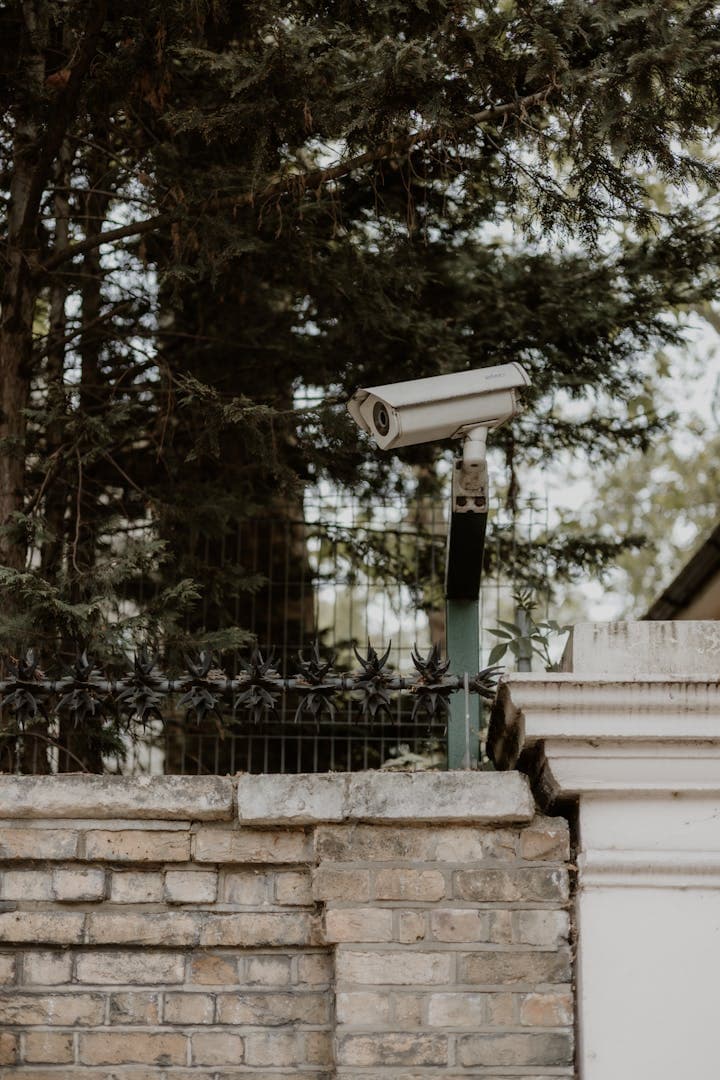
- What a security and camera system actually does
- Why insurance carriers are increasingly requiring both
- The right configuration for a six-month absence
- What to look for when hiring a home watch service
- The Canadian snowbird angle
- So, do you actually need both?
The honest framing: cameras detect, home watch verifies and acts
This is the single most important sentence in the home watch service vs security system debate. Cameras and alarms are excellent at telling you something happened. A NHWA-Accredited home watch professional is the one who walks into your kitchen and sees that the supply line under the sink is dripping a quarter-cup of water an hour onto your subfloor.
A camera does not see that. A motion sensor does not see that. Your monitored alarm will not call the police about it. By the time the smell reaches the camera microphone, you are already paying for a mold remediation team and a new vanity.
Conversely, your home watch professional is, on average, on your property for thirty to forty-five minutes once a week. The other 167 hours of that week, the only thing standing between your empty Florida home and a problem is your security system, your cameras, and whatever monitoring you have arranged.
The two services solve different problems. Pretending one replaces the other is how snowbirds end up with five-figure claims they thought they were insured against.
What a real NHWA-Accredited home watch professional actually does
The home watch industry has a credentialing body called the National Home Watch Association (NHWA), sometimes referenced informally as NAHWP. The distinction that matters is between a regular member and an Accredited Member. Per NHWA, Accredited businesses must pass a criminal background check on all principals, carry active general liability insurance and a bond, and submit to consumer affairs and Better Business Bureau verification. They must also re-accredit annually.
That is a meaningful filter. Anyone can call themselves a home watch service. Very few have actually been vetted.
A typical weekly visit from an Accredited member should include, at minimum:
- An interior temperature and humidity reading (you want roughly 78 to 80 degrees and under 60 percent humidity to keep mold at bay)
- A visual inspection of every ceiling, floor, and under-sink area for water damage
- Running every plumbing fixture for about 30 seconds to keep traps wet and prevent sewer gas
- An HVAC and air handler check, including the drain pan and condensate line
- An exterior walk for storm damage, pool issues, irrigation breaks, and signs of forced entry
- Mail and package retrieval so the home does not look obviously empty
- Generator exercise (if applicable) and a battery check on detectors
- A post-storm visit any time a named storm or significant weather event passes through
- A written report with date-stamped photos delivered to you the same day
If your current "home watcher" is a handyman who drives by and texts you "all good," you do not have a home watch service. You have someone driving by your house.
What it costs
In most Florida snowbird markets, weekly home watch from an Accredited provider runs $35 to $75 per visit, with the higher end reserved for larger homes (4,000+ square feet), waterfront properties, or homes with pools, generators, and multiple systems to check. Biweekly service is typically $45 to $95.
For a six-month absence at weekly cadence, you should budget $1,800 to $4,000 per season. That is real money, and it is the line item people most often try to cut. We will come back to that decision in a moment.
What a security and camera system actually does
A properly configured system covers the gaps a weekly visit cannot:
- 24/7 monitored alarm with cellular backup, so a cut phone line or downed internet does not silence the system
- Real-time motion alerts on cameras at the driveway, front door, garage, and key interior choke points
- Continuous or motion-triggered recording for evidence (this matters under Florida HB 621 squatter scenarios, where time-stamped video proving the unauthorized occupant arrived after you departed is what police need to remove them under the new law)
- Smart water shut-off valves that close automatically when a leak sensor trips, often before the home watch professional's next visit
- Insurance discounts that frequently offset a meaningful portion of the monitoring cost
For why cellular backup is non-negotiable on an empty home, see our deeper write-up on cellular monitoring for the empty snowbird home. Wi-Fi-only systems fail silently the moment the ISP has an outage, and you will not know until you come back in November.
Why insurance carriers are increasingly requiring both
This is the part most snowbirds are not tracking, and it is the reason the "either/or" framing is becoming dangerous.
Per the Insurance Information Institute (Triple-I) and standard ISO policy language, most homeowners policies contain a vacancy or unoccupancy clause that limits or excludes coverage if a home is unoccupied for 30 to 60 consecutive days. To keep coverage in force during a long absence, carriers increasingly require two things: a documented regular inspection schedule (often weekly), and active monitored security. Some Florida carriers also require utilities to remain on, the thermostat set to maintain a maximum interior humidity, and weekly photo evidence of the inspection.
Read that again. Weekly photo evidence. That is not something a camera produces. That is what an Accredited home watch report produces. We covered the broader carrier landscape in the 2026 Florida vacation home insurance crisis, but the short version is: if your policy has a vacancy clause and you do not have documented regular inspection, you may discover at claim time that you have been paying premiums on coverage you do not actually have.
The math changes when you frame it that way. A $2,500 home watch season is not an extra expense competing with your alarm bill. It is the documentation that keeps your $4,000 annual homeowners premium from being a worthless piece of paper.
The right configuration for a six-month absence
Here is what a defensible setup looks like for a typical snowbird:
- Monitored alarm with cellular backup. Door and window contacts, glass break sensors in main living areas, two or three interior motion sensors. Professionally monitored. Cellular primary or cellular backup, never Wi-Fi alone.
- 4 to 6 cameras. Driveway, front door, back patio or lanai, garage interior, and one or two interior choke points (main hallway, great room). Continuous recording on the exterior cameras, motion-triggered on interior. Cloud or local NVR with cellular failover.
- Smart water shut-off. A whole-home valve that closes automatically when a leak sensor trips. This single device prevents the most common and most expensive snowbird claim, which is a slow leak running for weeks.
- Weekly NHWA-Accredited home watch. Same provider all season, written checklist, photo report, post-storm visits.
- One trusted neighbor. Text-only basis. Not a key-holder, not a check-on-the-house person. Just someone who has your phone number if they see something obviously wrong (a moving truck, a parked car for three days, a window that looks broken). Your home watch professional does the actual verification.
Before you leave, run through our snowbird pre-departure checklist for Florida to make sure the systems you are paying for are actually armed and tested.
What to look for when hiring a home watch service
Not all home watch services are equal. The single most important filter is the word Accredited. NHWA has two tiers: regular Members, and Accredited Members. Accredited Members have passed background checks, proven insurance and bonding, and gone through annual re-verification. Regular members have paid dues. The difference matters.
Beyond accreditation, you want:
- Bonded and insured (ask for the certificate, do not just take their word)
- A written, repeatable checklist they perform every visit (ask to see it)
- Date-stamped photos delivered with each report, ideally same-day
- References from your specific neighborhood or HOA
- A backup technician who covers if the primary is sick or on vacation
- A signed written agreement that defines scope, frequency, and price
- Key custody handled professionally, not in a pickup truck glove box
Red flags to walk away from
- "I just drive by and check on it." That is not home watch. That is a wave from the street.
- No written checklist, or a checklist that fits on a sticky note
- No proof of bonding or general liability insurance
- Bundled services where the same person does cleaning, handyman work, pool, lawn, and home watch. Each is a different competency.
- Friend-of-a-friend deals with no written agreement
- Cash-only pricing
- No NHWA accreditation and no equivalent credential
If a home watch service ever does discover something serious, like an unauthorized person inside the home, your camera footage and their dated entry log become the documentary record you need under Florida HB 621. The two services reinforce each other in exactly that scenario.
The Canadian snowbird angle
For Canadian readers, the principle is identical, but the carrier requirements differ. Canadian home insurance policies typically require a "competent person" to inspect a vacant home at least once every 72 hours during heating season to maintain coverage against frozen pipe damage. The Canadian Snowbird Association and Snowbird Advisor both publish guidance recommending professional home watch over relying on neighbors, precisely because a neighbor's casual visit does not meet the documented inspection standard most carriers now require.
Whether your second home is in Florida or your primary home is in Ontario, the structure is the same: detection technology plus on-site human verification, with documentation that satisfies your carrier.
So, do you actually need both?
If you can only afford one, the answer depends on the failure mode you are most worried about. If you fear break-ins, vandalism, or squatters, the system side matters most. If you fear water damage, mold, HVAC failure, or insurance non-payment at claim time, the home watch side matters most.
But the realistic answer for most snowbirds, especially those with carriers tightening vacancy language for the 2026 season, is that the two services are no longer optional alternatives. They are complementary parts of a single posture. The cameras and alarm cover the moments. The home watch covers the weeks. Together, they cover the season.
The good news is that getting the system side right is the cheaper, easier half of this equation, and you can have it set up in a single afternoon. If you would like a configuration matched to a six-month Florida absence, with cellular backup and the camera placements that actually matter, you can start your Smart Security Concierge order here. Then call two NHWA-Accredited home watch services in your zip code, get quotes, and pick one. That is the whole playbook.
Sources and further reading: National Home Watch Association (nationalhomewatchassociation.org), Insurance Information Institute on vacancy coverage (iii.org), Snowbird Advisor home watch guide (snowbirdadvisor.ca), Canadian Snowbird Association (snowbirds.org), Travelers Insurance snowbird winterization guidance (travelers.com).