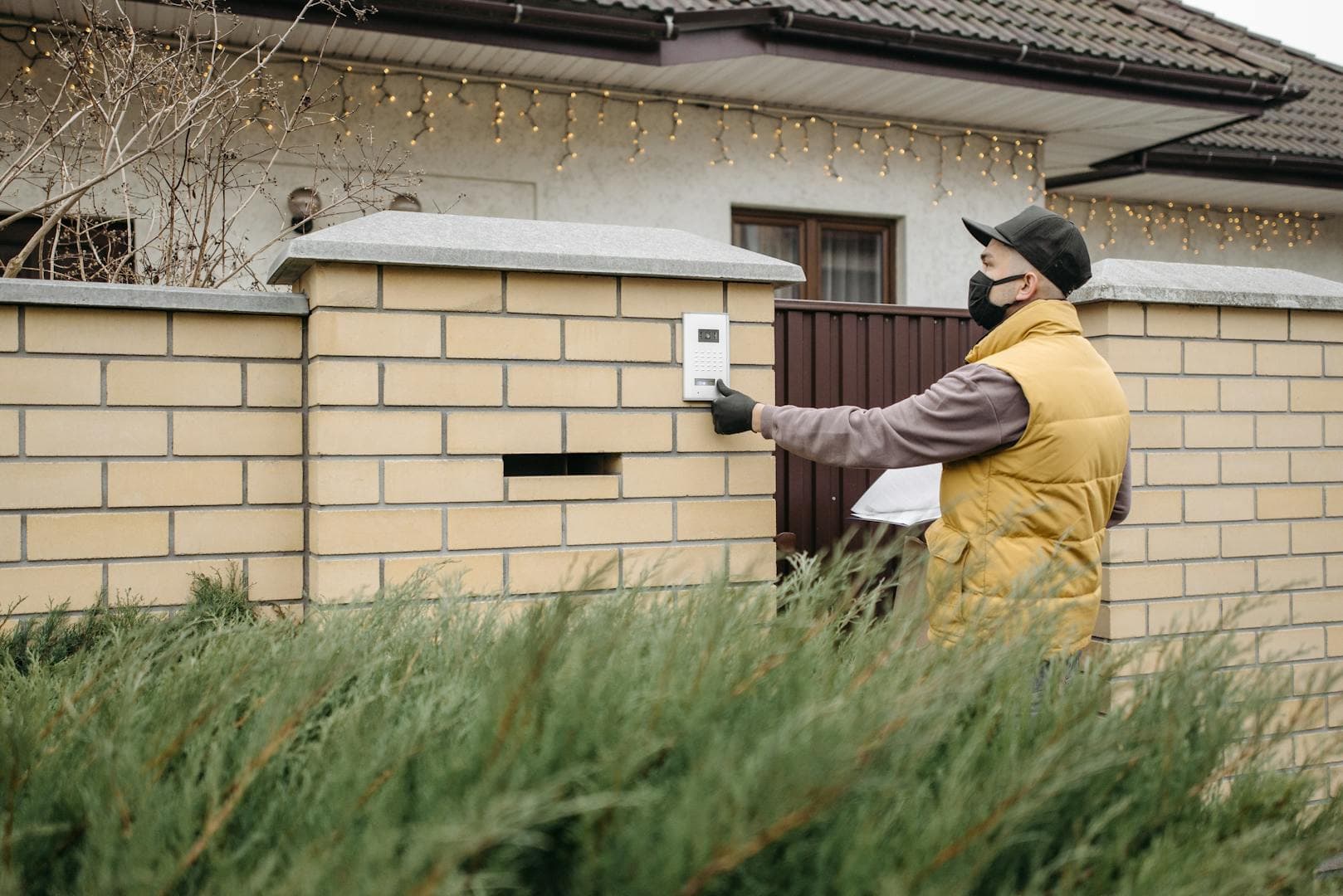
If you spend October through April in Florida and the rest of the year somewhere cooler, you have probably watched a few of those local news segments where a homeowner returns to find strangers living in the house, refusing to leave, and quoting tenant law back at the police. The stories spread fast through HOA boards, Talk of The Villages threads, and clubhouse conversations because the fear is real and specific: an empty house, a long absence, and a legal system that historically treated this as a slow civil dispute rather than a fast criminal one.
Florida moved to fix that in 2024 with House Bill 621. The new statute, codified at Florida Statute 82.036, gives owners a sheriff-driven removal pathway that bypasses the months-long civil eviction process for true squatters. It is a meaningful tool, but it has limits, and it works best when paired with the kind of documentation and monitoring that a typical snowbird household does not have in place by default. This article walks through what HB 621 actually does, where it stops, and the practical playbook for keeping your Florida home off the squatter list in the first place.
In this article
- Florida's Squatter Law (HB 621): A Snowbird's Playbook for Empty-House Season
- What HB 621 Actually Does
- The Important Limits You Need to Understand
- Why Snowbirds Are the Exact Target Demographic
- The Seven-Step Snowbird Prevention Playbook
- What to Do If It Actually Happens
- What HB 621 Did Not Fix
- The Insurance Angle
- The Bottom Line for Snowbirds
What HB 621 Actually Does
Governor Ron DeSantis signed HB 621 on March 27, 2024, and the law took effect on July 1, 2024. It created a new section of Florida law titled "Limited alternative remedy to remove unauthorized persons from residential real property," now found at Florida Statute 82.036. The statute's stated intent is to "quickly restore possession of residential real property to the lawful owner" while limiting the opportunity for criminal activity.
Before HB 621, an owner who returned to find squatters in the house often had to file a civil eviction or unlawful detainer action, serve the occupants, wait for a court date, and only then ask a judge for a writ of possession. That process could stretch into months. Police would frequently decline to intervene at the door because the occupants would claim a tenancy, and the dispute would be labeled "civil." Many snowbirds learned this the hard way.
Under the new statute, the owner or an authorized agent submits a verified Complaint to Remove Persons Unlawfully Occupying Residential Real Property to the sheriff of the county where the property sits. The sheriff verifies that the person filing is the record owner and that the situation appears to qualify, then serves a notice to immediately vacate and puts the owner back in possession. The sheriff can serve by hand or by posting on the front door, and may arrest occupants for trespass or any outstanding warrants. As the international law firm Greenberg Traurig summarized, the law lets owners "request law enforcement assistance to immediately remove a squatter" without going through traditional litigation.
The statute also sharpens the criminal side. Knowingly presenting a falsified lease or deed to claim a residence is a first-degree misdemeanor. Unlawfully occupying a dwelling and causing $1,000 or more in damages is a second-degree felony. Fraudulently advertising someone else's property for sale or rent is a first-degree felony. As Tampa's WFLA reported at the signing, the bill was framed as a property-rights bill rather than a tenancy bill, and that framing matters when you call the sheriff.
The Important Limits You Need to Understand
HB 621 is not a universal eviction shortcut. It applies only to true unlawful occupants, and Florida Statute 82.036 carves out several categories that disqualify the owner from using it:
- Current or former tenants under a lease, written or oral, even an expired one
- People involved in pending litigation with the owner over the property
- Immediate family members of the owner
- Anyone listed on the title as an owner or co-owner
That last category sounds obvious, but it matters in blended-family and inheritance situations that are common in the snowbird demographic. If a sibling or adult child is on the deed, even if they have not lived in the house in years, HB 621 is not your tool. Likewise, if you let a contractor's crew stay for a few nights last season and have any record of it, a clever occupant could try to argue a prior consent that takes you out of the statute and back into civil eviction.
This is why the affidavit step is not a formality. The owner is swearing under penalty of perjury that none of those exceptions apply. A Florida real estate attorney is well worth the consult before you sign, and many sheriffs' offices recommend that step explicitly. Reasonable expectations about scope keep HB 621 useful and keep you out of the wrongful-removal exposure built into the statute, where a wrongly removed occupant can recover triple the fair market rent, costs, and attorney fees.
Why Snowbirds Are the Exact Target Demographic
Squatters look for the same signals burglars do, then look for one more: predictability. A dark house for one weekend is a burglary opportunity. A dark house for six months, with predictable mail accumulation, an unattended back gate, and an HOA-mowed lawn that announces "the owner is not the one cutting this grass," is a residency opportunity.
The typical Florida snowbird home checks several boxes that show up in squatter cases:
- Vacancy of five to seven months on a known seasonal rhythm
- A lanai or pool cage with screen doors that are easy to defeat
- An older alarm system that may not have cellular backup
- No on-site relatives or daily visitors
- Utilities that remain on, so the home is "livable" the moment someone gets inside
None of this is cause to panic, but it is cause to plan. The same vacancy window that drives Florida's vacation home insurance crisis is the window squatters watch for. The good news is that the steps that protect against burglary, water damage, and insurance non-renewal also produce the documentation that makes HB 621 work the way it is supposed to.
The Seven-Step Snowbird Prevention Playbook
1. Hire an NAHWP-Accredited Home Watch Service
A weekly documented walk-through by a National Association of Home Watch Professionals member is the single most useful thing you can do. Each visit produces a timestamped report, often with photos, that establishes a continuous chain of custody over the property. If something goes wrong, you have last-Tuesday's photo of the empty foyer to hand the sheriff. We compare home watch and camera-only approaches in detail in our piece on home watch versus cameras for snowbirds, and the short answer is that you want both.
2. Cameras with Cellular Backup and Cloud Recording
Cameras that lose connectivity when the internet drops are not useful in a squatter scenario, because cutting the WiFi is one of the first things an occupant does. A system with a cellular failover keeps recording and keeps uploading. The recorded footage establishes when the property was last verifiably empty, which is exactly the timeline a sheriff needs to be confident the occupant is unlawful rather than a forgotten-about tenant. We cover this configuration in cellular monitoring for the empty snowbird home.
3. Smart Locks With Code Discipline
Use code-based smart locks rather than physical keys for any contractor, cleaner, or pool service access. Then, and this is the part most homeowners skip, change the codes after every contractor cycle and definitely before lock-up day. A circulating code that ten people have used over three seasons is a colorable-claim risk, not a convenience.
4. Mail and Package Hold
Visible mail accumulation is a "no one is home" billboard. File a USPS hold, redirect package deliveries to your northern address, and unsubscribe from any catalogs that pile up. Your home watch service should also clear flyers and door hangers on each visit.
5. Continued Yard and Exterior Care
An overgrown lawn is the cheapest possible signal of vacancy. Most HOAs in snowbird-heavy communities handle the front yard, but verify what is and is not covered, and arrange separate service for anything the HOA does not touch. Lighting on dusk-to-dawn timers, with at least one timer that varies, helps too.
6. Notify Neighbors and the HOA of Departure Dates
A neighbor who knows you left on April 15 and returns on October 20 is a witness, and witnesses matter to a sheriff. Give a trusted neighbor your home watch company's number and your cell. Ask the HOA security desk, if you have one, to log your absence dates. None of this requires broadcasting your travel to the world; it just requires telling the small circle that would be expected to notice.
7. Document the Property at Lock-Up
On the day you leave, walk the house with your phone and take timestamped photos of every room, every exterior elevation, the garage, the lanai, and the meter. Email them to yourself so they live in a dated cloud archive. Repeat at re-entry. This becomes Exhibit A if you ever have to prove the condition of the property when you left, both for an HB 621 affidavit and for an insurance claim.
For a comprehensive seasonal version of all of the above, see our snowbird pre-departure checklist for Florida.
What to Do If It Actually Happens
If your home watch service or a neighbor reports occupants, do not fly back and confront them. Confrontation is how owners get hurt and how cases get muddied. Call the local sheriff's office non-emergency line first, not 911 unless there is an immediate threat, and specifically reference Florida Statute 82.036 and HB 621. Send your home watch service or property manager to meet the deputy if you cannot get there quickly. Pull together the verified complaint with your government-issued ID, your deed or recent property tax bill, your timestamped lock-up photos, and your home watch logs. Engage a Florida real estate attorney the same day to review the affidavit before submission. Done in this order, the statute is designed to give you possession back in days, not months.
What HB 621 Did Not Fix
The law is targeted, not total. It does not shorten standard tenant evictions, which still run on the Chapter 83 timeline. It does not resolve family disputes, inheritance fights, or co-owner disagreements. It does not help if a former contractor or short-term renter has any plausible document, even an old invoice or a months-old text giving them keys, that supports a colorable claim of permission. In those scenarios, you are back in civil court, and your prevention work is what limits the damage.
It is worth saying clearly: the cases where HB 621 is most useful are also the cases that good prevention makes least likely. The statute is your backstop, not your front line.
The Insurance Angle
Florida's homeowners insurance market has been tightening hard on vacant and seasonally occupied homes. Several carriers now require, or strongly prefer, documented home watch visits and active monitoring as a condition of writing or renewing a policy on a second home. A Certificate of Alarm from a monitored system, plus weekly home watch reports, is increasingly the package that keeps a policy in force at a non-punitive premium.
The same documentation does double duty under HB 621. The home watch logs and camera timeline that satisfy your underwriter are the same evidence that lets a sheriff act with confidence. One investment, two protections. Given where premiums are heading in 2026, this is no longer optional in the way it once was.
The Bottom Line for Snowbirds
HB 621 is a real improvement. For genuinely unlawful occupants, the sheriff-driven path under Florida Statute 82.036 turns a months-long ordeal into a days-long process. But it works best for owners who can prove vacancy, prove ownership, and prove they did not invite the occupants. That proof is what prevention produces.
If you are heading north this spring and the squatter stories have been on your mind, the answer is not to lose sleep over edge cases. The answer is to put weekly eyes on the house, keep cameras recording over cellular, rotate codes, hold the mail, document the lock-up, and tell the neighbors when you will be back. Do that, and HB 621 becomes the seldom-used backstop it was designed to be.
If you would like help putting that monitoring layer in place before you leave, including a Certificate of Alarm package that satisfies most Florida carriers and pairs cleanly with an NAHWP home watch service, you can get started with Smart Security Concierge here. We will walk through the property with you, configure cellular failover, document the baseline, and give you the kind of paper trail that protects both your insurance standing and your rights under HB 621.