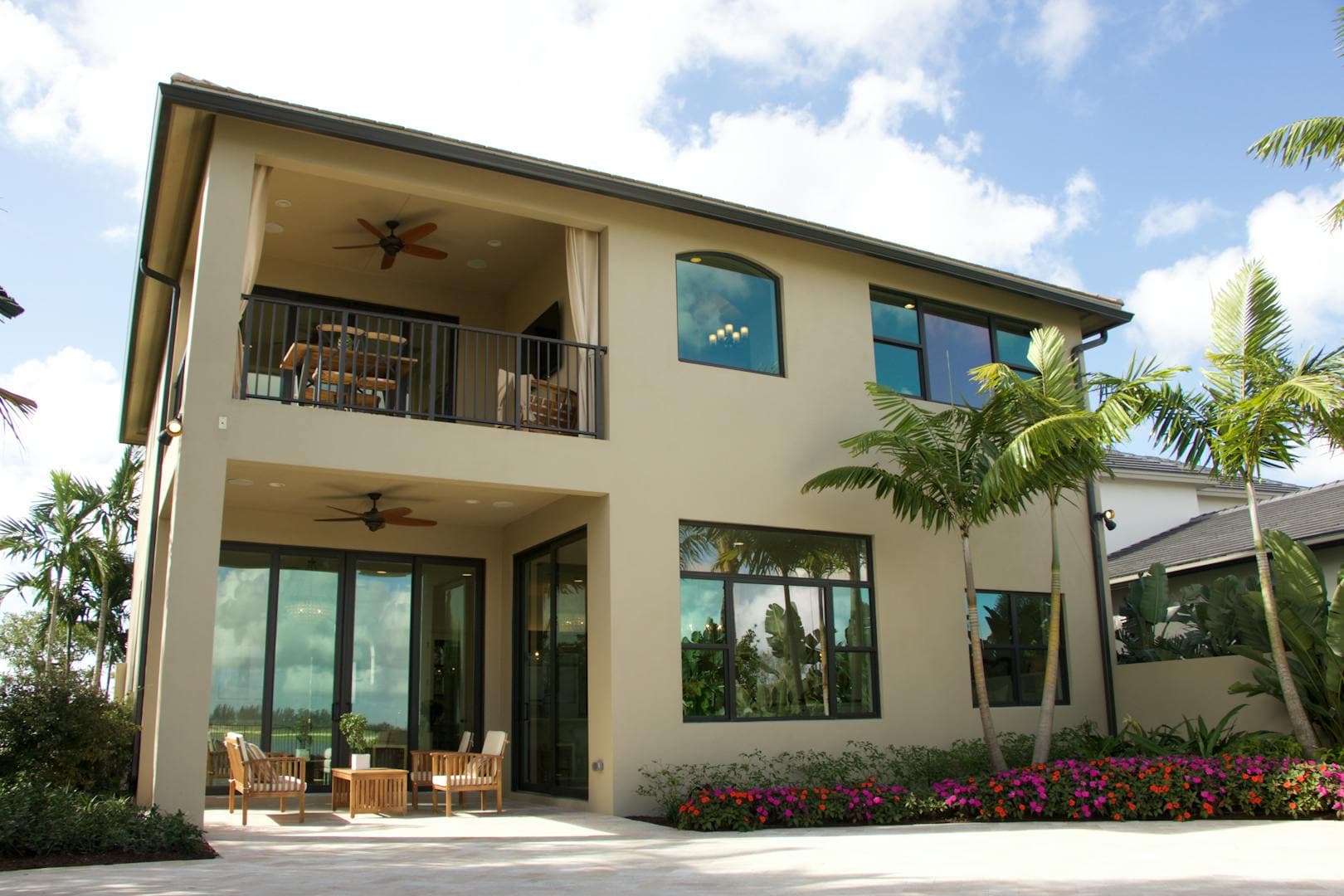
If you own a condo in Naples, a villa in The Villages, or a single-family home in a Sarasota 55+ community, you already know the drill: before you hang a wreath, paint a shutter, or stick a camera under the eaves, somebody on the architectural review committee is going to have an opinion about it. That can feel exhausting when all you want to do is keep an eye on the place while you're back in Michigan or Ohio for the summer. But the good news is that almost every snowbird security goal — doorbell camera at the unit door, smart lock, monitored sensors, water leak detection, even exterior cameras in many cases — can be accomplished within HOA rules. You just have to know where the lines are.
This guide walks through what Florida law actually says, what your governing documents probably say, what's almost always allowed without permission, what needs an ARC application, and what to do when the board pushes back unfairly. None of this is legal advice — for a real opinion on your specific docs, talk to a Florida community-association attorney. But it should keep you out of the most common fights.
In this article
- HOA-Friendly Security for Florida Condos & 55+ Communities
- Why HOAs care about cameras and exterior changes
- Read your governing documents before you buy hardware
- What Florida law actually says
- What's almost always allowed without ARC approval
- What needs ARC approval but is usually achievable
- What's usually a no-go without negotiation
- The condo-specific playbook
- The 55+ single-family playbook
- How to write an ARC submission that gets approved
- When the HOA is wrong
- The bottom line for snowbirds
Why HOAs care about cameras and exterior changes
Before you draft your ARC application, it helps to understand the board's perspective. Most Florida condo and HOA boards are not trying to make your life difficult. They're worried about four specific things:
- Aesthetics and property values. Surface-mounted conduit, mismatched paint, and visible wiring on a uniform building facade trigger complaints from neighbors and (boards believe) hurt resale.
- Common-area privacy. A camera on your lanai that captures the pool deck, the parking lot, or your neighbor's slider is a lawsuit waiting to happen. Florida is generally a one-party-consent state for audio recording, which makes audio in shared spaces especially fraught.
- Building integrity. Drilling through stucco, siding, or a shared wall can void warranties, breach the building envelope, and cause water intrusion — the number-one source of insurance claims in Florida coastal buildings.
- Liability and precedent. If they let you do something nonstandard without a paper trail, the next twelve owners want the same thing, and now the board has a fair-housing or selective-enforcement problem.
When you frame your ARC application around those four concerns — "matches existing color, no exterior wiring, no common-area capture, no facade penetration" — approval rates go way up.
Read your governing documents before you buy hardware
Florida community-association docs are layered. The hierarchy, from most authoritative to least, is typically: the recorded Declaration (CC&Rs for HOAs, the Declaration of Condominium for condos), the Articles of Incorporation, the Bylaws, and finally the Rules and Regulations the board can adopt without an owner vote. Lower-level documents can't override higher-level ones, which matters when a board tries to enforce a "no cameras" rule that doesn't actually appear in the Declaration.
Pull your full document set from the property manager or the Florida Department of Business and Professional Regulation portal and search for these terms:
- Exterior modifications or alterations — this is the section that governs almost any visible change.
- Cameras, surveillance, or recording devices — many docs are silent here, which usually works in your favor.
- Wiring, antenna, or satellite — the FCC's Over-the-Air Reception Devices rule preempts a lot of HOA antenna restrictions, and similar reasoning sometimes applies to wireless camera receivers.
- Common element vs. limited common element vs. exclusive use area — this defines who controls each surface. A lanai cage is usually a limited common element; the inside-facing surfaces of your unit door are usually yours.
- Signs — alarm yard signs and security stickers often have placement and size limits.
Then ask the manager for the ARC application checklist and the typical turnaround time. In most associations it's two to six weeks, which means you should start the paperwork before you fly south, not the day after you arrive.
What Florida law actually says
Two statutes do most of the work. Florida Statute Chapter 718, the Condominium Act, governs condos. Florida Statute Chapter 720, the Homeowners' Association Act, governs non-condo HOAs. Both give boards broad authority to regulate exterior alterations to common elements, but both also recognize specific owner protections.
The most cited example is hurricane protection. Under Florida Statute 718.113(5) for condos and analogous provisions in 720, owners cannot be unreasonably denied the right to install hurricane shutters, impact glass, or other code-compliant hurricane protection — the board can specify the type and color, but it cannot say no outright. Reform-era legislation, including the package commonly referred to in trade press as HF 293 and subsequent updates, has further strengthened these rights, though the operative statute is still 718.113.
For cameras specifically, there is no Florida statute that forces an HOA to approve exterior surveillance equipment, which means your leverage is in the governing documents and in selective-enforcement arguments. If the docs are silent on cameras and the board has previously allowed any owner to install one, denying yours becomes legally risky for them. The Becker law firm, Kaye Bender Rembaum, Goede DeBoest & Cross, and Lobeck Hanson all publish free Florida community-association blogs that walk through these fact patterns in plain English — Kaye Bender Rembaum in particular has a deep archive on camera disputes.
If you believe the board is enforcing a rule that isn't in the docs, or enforcing it selectively, the Florida DBPR Division of Condominiums, Timeshares, and Mobile Homes handles condo complaints, and the Office of the Condominium Ombudsman provides free dispute mediation.
What's almost always allowed without ARC approval
Anything inside your unit, on the interior side of your door, or replacing existing equipment in like-kind fashion is usually fair game. Specifically:
- Interior cameras. Indoor cameras pointed at your own living space are not the HOA's business.
- Doorbell cameras as like-kind replacement. If your unit door already has a wired doorbell, swapping it for a Ring, Nest, or equivalent on the same wiring is almost always treated as a permitted maintenance replacement. Battery doorbells stuck to the door frame on the interior-facing side of the threshold are even safer.
- Wireless peel-and-stick door and window sensors. No drilling, no exterior visibility, no wiring. SimpliSafe, Ring Alarm, and similar systems are designed for exactly this scenario.
- Smart locks on your unit door. The exterior face has to match the existing finish in most condos, but the lock itself is yours to swap. Pick a model in the same color family as the original hardware and you'll rarely get pushback. We cover the workflow, including share codes for cleaners and pool techs, in our smart-lock guide for service providers.
- Water leak sensors, smoke listeners, and freeze sensors. All interior, all wireless, all invisible from outside.
- Cellular monitoring. A cellular base station that doesn't require any exterior wiring or antenna is the snowbird's best friend — especially in buildings where the internet may go down for weeks during storm season. Cellular monitoring for an empty snowbird home walks through the setup.
What needs ARC approval but is usually achievable
For 55+ single-family communities and most villa-style attached homes, exterior cameras are genuinely on the table — you just have to file the paperwork:
- Exterior cameras under the eaves. Tucked-up placement, neutral housing color (white, beige, or matched to the soffit), and a sight-line that captures only your own driveway, walkway, and front door.
- Smart accordion or roll-down hurricane shutters. Statute-protected as a category; the board picks color and style.
- Security yard signs and decals. Often allowed within size limits (typically 12x12 inches or smaller), and a properly placed sign is one of the cheapest deterrents you can buy.
- Floodlight cameras replacing existing fixtures. If there's already a floodlight on the soffit, swapping it for a Ring or Wyze floodlight cam is usually framed as like-kind — but file the ARC anyway because the camera component is new.
What's usually a no-go without negotiation
- Cameras pointed at hallways, pool decks, parking lots, or neighboring units. Even if your camera is mounted on your own surface, if the field of view captures common areas you'll get a cease-and-desist.
- Surface-mounted exterior conduit or wiring runs. If you can see the cable from the sidewalk, expect a violation.
- Aftermarket floodlights that change the building's lighting profile.
- Roof-mounted antennas, dishes beyond the FCC-protected size, or any penetration of a shared roof membrane.
The condo-specific playbook
If you own a unit in a multi-story building, accept the constraint and build inward. A complete, board-friendly snowbird stack looks like this:
- Battery-powered doorbell camera at the unit door, mounted on the interior-facing frame so it's not visible from the hallway.
- Smart lock on the unit door in a finish that matches the original.
- Wireless contact sensors on the front door and the slider to the lanai.
- Glass-break or vibration sensor on the lanai slider — the most common forced-entry point in Florida condos.
- Interior camera in the main living area, pointed away from the windows so you're not capturing the building across the way.
- Water leak sensors under every sink, behind the washer, and at the water heater. Insurance claims data consistently shows water damage as the top condo loss category.
- Cellular-backed alarm panel with 24/7 monitoring so a hurricane-related internet outage doesn't blind you.
That entire stack is invisible from any common area, requires zero ARC approval in most associations, and gives you the same coverage as a full single-family system.
The 55+ single-family playbook
Detached villas in The Villages, Solivita, Del Webb communities, and similar neighborhoods are almost a normal SFH from a security standpoint — the rules are stricter than an unregulated subdivision but far looser than a high-rise. The workflow:
- File the ARC application before you buy hardware. Include the camera model spec sheet, a photo of the proposed mounting location, a marked-up image showing the field of view (proving no neighbor capture), and a note that wiring will route under the eaves and through a soffit penetration sealed to match.
- Choose camera housings that match your soffit color. Most major brands offer white, black, and bronze.
- Combine the security stack with the rest of your two-home tech setup — thermostats, water shutoff, leak detection — so everything reports to one app. Our two-home tech stack guide covers the full architecture.
- Run the pre-departure checklist before you head north each spring.
How to write an ARC submission that gets approved
Boards approve applications that look professional, address their concerns up front, and don't require the reviewer to imagine anything. A submission that gets fast approval has six elements:
- A one-paragraph cover note describing the project in plain language.
- The manufacturer spec sheet for each device, with dimensions and color highlighted.
- Photos of the existing exterior at every proposed mounting point.
- A marked-up photo or simple diagram showing the camera's field of view, with explicit text noting that no common areas, neighboring units, or shared walkways are captured.
- A short statement confirming wiring will be concealed (under eaves, through soffits, or interior-only) and any penetrations will be sealed to match.
- A statement confirming you'll remove the equipment and restore the surface if you sell, at your expense.
That last line is what gets the board over the finish line, because it removes the long-term liability concern entirely.
When the HOA is wrong
Sometimes a board will deny an application on grounds that aren't in the docs, or selectively enforce a rule. Before you escalate, write a polite letter citing the specific section of the Declaration or Bylaws that supports your request, and ask the board to point to the section that prohibits it. Many disputes end there because the board realizes their rule is a "we've always done it this way" rather than a written restriction.
If that fails, your options in Florida are: request mediation through the DBPR Division of Condominiums (free for condo owners), file a formal complaint, or retain a community-association attorney for a demand letter. Becker, Kaye Bender Rembaum, Goede DeBoest & Cross, and Lobeck Hanson all do this work statewide. A two-page demand letter often resolves the issue without litigation.
The bottom line for snowbirds
You can absolutely build a serious security and monitoring system around Florida HOA rules. The trick is to design inward first — doorbell at the unit door, smart lock, peel-and-stick sensors, leak detection, cellular monitoring — and treat exterior cameras as a separate ARC project with proper paperwork. Done right, your unit is protected from the moment you lock up in April until you turn the key again in October, and your relationship with the board stays cordial.
If you want help mapping the right stack to your specific community — condo vs. villa vs. detached, with or without exterior cameras, cellular vs. Wi-Fi, professionally monitored vs. self-monitored — we'll put together a no-pressure plan tailored to your governing documents. Get your custom snowbird security plan.