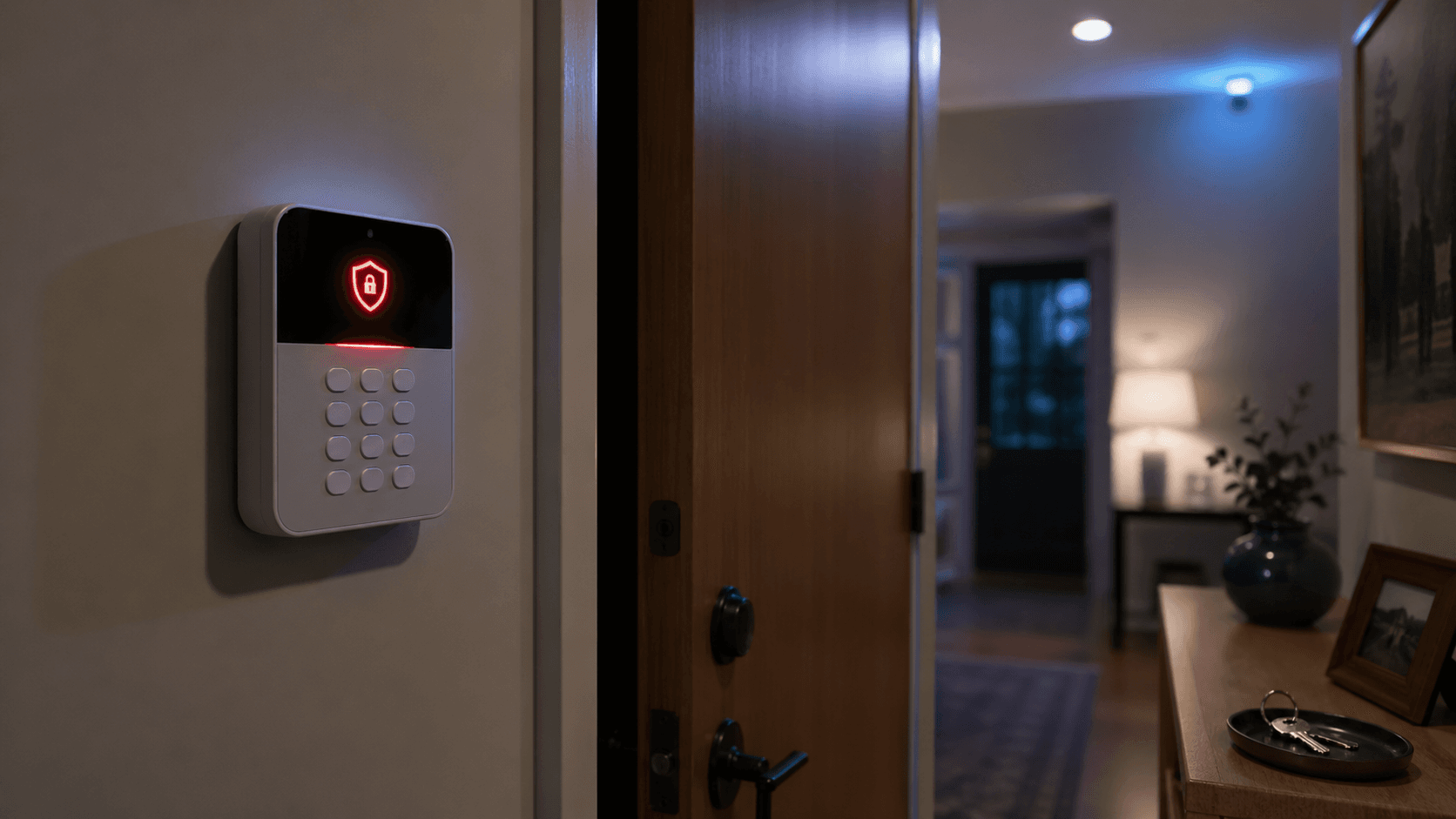
Being startled awake by a home security alarm is a scenario no homeowner wants to experience. You don't want to be crippled with fear, asking yourself what happens when the alarm goes off and when you can expect first responders to arrive.
It's wise to learn as much as you can about the typical home security alarm response in your area before someone breaks in or a fire starts. That way, you can stay as calm and clear-headed as possible if the unthinkable happens. Here's what to know about the typical step-by-step response process triggered by a home security alarm.
In this article
What Happens When the Alarm Goes Off
Typical police response times vary by location, history of home security false alarms, and other factors. Therefore, it's impossible to predict precisely how fast a first responder will show up at your door after your alarm goes off. However, most monitored home security providers contact local authorities within seconds or minutes of the initial alarm trigger. Here's a step-by-step overview of what happens after an alarm is triggered (in most situations).
Step 1: Alarm Gets Triggered
Home security alarms are typically triggered when one of its sensors or cameras gets triggered while the system is armed. Some sensors detect motion near windows and doors. Others can detect when glass (in a window or door) breaks. Some sensors detect environmental threats such as smoke, water leaks, and carbon monoxide.
Step 2: Monitoring Center Receives Alarm Signal
When a home security sensor detects an anomaly, it activates a siren from the security system's control panel. The siren can often be heard throughout the homeowner's house, where it may serve to startle and scare away the intruder. The security system simultaneously alerts the monitoring center of the alarm trigger via broadband, cellular, or landline. This triggers a reliable alarm monitoring center process designed to send help to the homeowner as quickly as possible.
Step 3: Trained Operator Attempts to Verify
As soon as the monitoring center receives the alarm alert, a trained operator immediately attempts to contact the homeowner via text, phone, or keypad. Their primary goal at this time is to verify whether the threat is real or a false alarm.
Step 4: Trained Operator Notifies Emergency Responders or Cancels the Dispatch Request
If the operator is unable to reach the homeowner or if the homeowner confirms the alarm is genuine, the operator immediately notifies emergency responders. Home security monitoring centers understand the importance of contacting local authorities without delay. Once they do, the speed of the emergency response is out of the operator's hands and shifts to the responding police or fire department.
If the trained operator finds out from the homeowner that the situation is a false alarm, they immediately notify authorities to cancel the response. False alarms (especially those attributed to user error) can result in fines to the homeowner.
Step 5: Trained Operator Calls Emergency Contacts
If the operator can't reach the homeowner, they'll attempt to call anyone on the homeowner's emergency contact list and notify them of the situation. They do this only after contacting emergency responders.
Self-Monitored vs. Professionally Monitored Response Times
Some homeowners understandably want to save costs by purchasing self-monitored security systems instead of paying a monthly fee for professional monitoring. However, it's important to understand that the emergency response time for professionally monitored systems is typically faster than that achieved through self-monitoring systems.
With professional monitoring, the monitoring center follows strict, rapid processes for notifying emergency responders after an alarm trigger. With a self-monitored system, the homeowner has to notify the police themselves. They may be unable to do this rapidly if they freeze up due to fear or if they're incapacitated by an intruder. Professional monitoring can provide invaluable peace of mind that someone will respond to your emergency even if you can't call for help yourself.
Common Misconceptions About Police Response
Some people mistakenly believe that the home security monitoring center is solely responsible for the speed of emergency response after an alarm trigger. However, this isn't the case. The monitoring center aims to contact the police or fire department within seconds of the alarm trigger. However, they don't have any control over how long it takes emergency responders to arrive on the scene.
Another misconception is that emergency responders will automatically prioritize all triggered security alarms. However, since many home security alarm calls are false, police are more likely to prioritize verified alarms while responding slightly slower to unconfirmed alarms. Therefore, it's important for homeowners to try to verify alarms with their monitoring center if they are able to do so.
How to Reduce False Alarms While Staying Prepared
It's in a homeowner's best interest to reduce false security alarms whenever possible. Repeat false alarms can result in high fees and slower police response times. Here are a few ways homeowners can reduce false alarms while staying prepared for any situation:
- Clean motion sensors frequently to remove spider webs, dust, or anything else that might trigger movement when the sensor is armed.
- Place sensors in areas that won't be easily triggered by pets, curtains, plants, or movements caused by drafts.
- Install "pet-friendly" motion detectors to avoid alarms triggered by animal movements.
- Educate all household members, cleaners, babysitters, and relatives about the security system and how to properly use it.
- Check the batteries in your home security system to prevent malfunctions caused by low voltage.
- Make sure doors and windows near sensors are locked before arming the system to ensure that someone doesn't accidentally open them and trigger the alarm.
- Check your system regularly on "test mode" to make sure all sensors are working as intended.
- Install your home security system app on your phone so you can remotely disarm or arm the system for friends or guests.
- Memorize your code and keep it written in a convenient place. You'll need it if your alarm goes off and your monitoring center needs to verify your identity.
Investing in a user-friendly, reliable home security system is one of the best ways to reduce false alarms while staying prepared. Smart Security Concierge can help you compare various systems from top brands near you. Contact us today to schedule a consultation and take the first step toward finding the ideal security system for your family's needs.