Up north, summer is the easy season. The pipes are not going to freeze, the driveway does not need plowing, and the lawn service handles itself. Down in Florida, summer is the hard season — and you are not there to manage it. Closing up a vacation home for summer in Florida is a different exercise from anything your friends back in Michigan or Ontario are doing in October. Hurricanes form in the Gulf, humidity climbs into the 90s, a slow leak under the dishwasher has eight weeks to do its work, and a vacant house is a quiet target. The good news: with a deliberate lock-and-leave routine, the right technology, and a credentialed home watch service, you can fly north in May and not lose a wink of sleep about the house in Naples or Vero Beach.
This guide walks through what to do — and when — to summerize a Florida home for a five-month absence. It is the summer counterpart to your fall return checklist, with an emphasis on the four threats that are unique to a vacant Florida house in June, July, August, and September.
In this article
- How to Summerize a Florida Vacation Home: Hurricanes, Humidity & Empty-House Risk
- The Four Threats to a Florida Home in Summer
- Hurricane Prep Done in May, Not June
- Humidity Is the Silent Killer
- The Water Plan: Three Layers
- Empty-House Security
- Hire a NAHWP-Credentialed Home Watch Service
- Document Everything for Insurance
- The Peace-of-Mind Math
The Four Threats to a Florida Home in Summer
Before the checklist, understand what you are defending against. A snowbird's northern home, sitting empty in January, faces frozen pipes and ice dams. A Florida home, sitting empty in July, faces a different and arguably nastier set of risks.
1. Hurricanes and Tropical Storms
The Atlantic hurricane season runs June 1 through November 30. According to the NOAA National Hurricane Center, the 1991-2020 climate average is 14 named storms, 7 hurricanes, and 3 major hurricanes (Category 3 or higher) per season. The first named storm typically forms in mid to late June, with peak activity from mid-August through mid-October — exactly when most snowbirds are at their northern address. You are not going to be the one putting up the panel shutters at 6 a.m. with a Cat 3 closing in. Your prep needs to be done before you leave.
2. Humidity and Mold
Florida summer dew points sit in the 70s for weeks at a time. Indoor humidity in a closed-up house, with the AC turned off or set too high, will climb past 70 percent within a day or two. Mold begins to colonize porous materials — drywall, baseboards, upholstery, the back of a leather sofa — in roughly 48 to 72 hours under those conditions. A house you walk back into in October with a musty smell is a house that is already losing the battle. This is the silent, slow-motion version of a burst pipe: you do not hear it happen, but the damage is real and expensive.
3. Water Leaks
Water damage and freezing accounted for roughly 22.6 percent of homeowners insurance losses in 2023, according to the Insurance Information Institute, with average claim severity around $15,400. Those numbers are for occupied homes where someone notices the leak in an hour. In a vacant Florida home, a slow supply-line drip behind the washing machine, running for ten weeks at gulf-coast humidity, can easily push a claim into the tens of thousands once you factor in subfloor replacement and remediation. The leak is not the problem. The duration is the problem.
4. Squatters and Break-Ins
A house with a dark porch, an overflowing mailbox, and uncut grass is a billboard. Florida cities have well-documented squatter cases — people moving into vacant homes, changing the locks, and presenting fraudulent leases. The 2024 reform addressed this directly, but it still requires that you (or someone acting on your behalf) discover the occupation and file a complaint. If your home watch service is not visiting weekly, that discovery happens in October.
Hurricane Prep Done in May, Not June
By the time the National Hurricane Center is naming a storm in the Gulf, you should already be at your northern home with the Florida house buttoned up. The cone of uncertainty is not the time to learn that your accordion shutters stick.
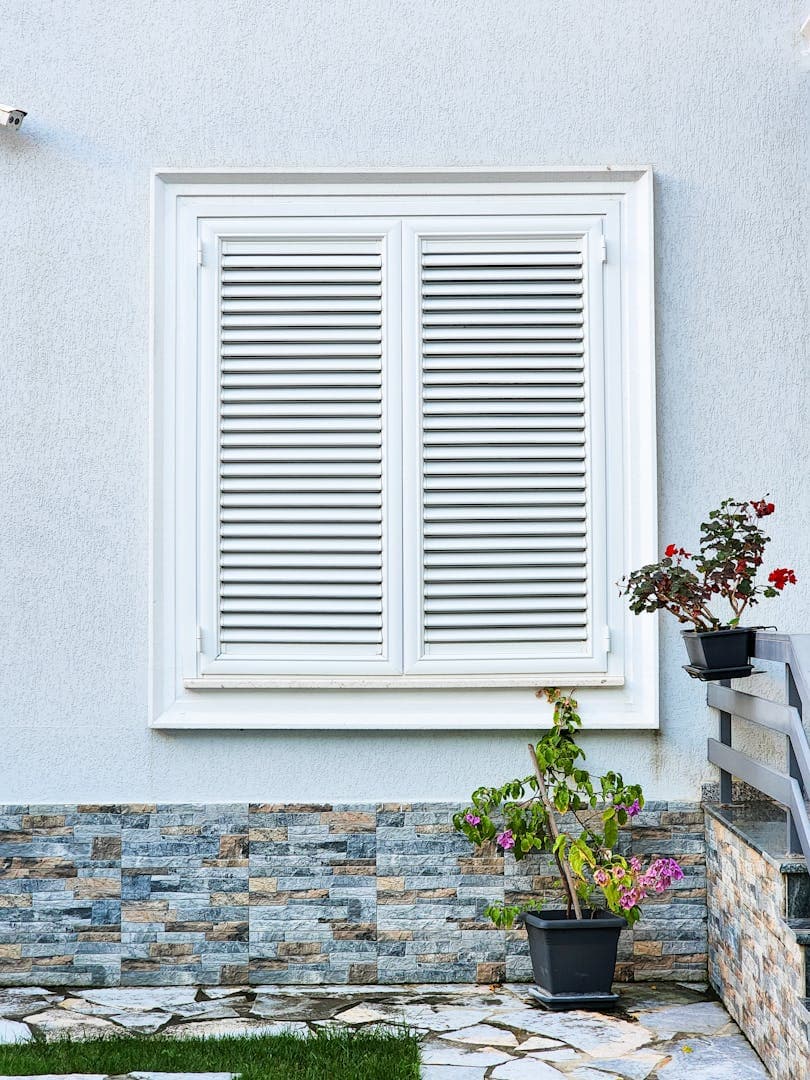
- Test every shutter. Roll down and re-deploy each accordion shutter. Pull every panel shutter out of storage, lay them on the lanai, confirm the wing nuts and bolts are present and not corroded, then re-stow them in the order they go up — labeled by window. If you have hurricane impact glass, walk the perimeter and look for failed seals or chips that compromise the rating.
- Service the generator. Run the unit under load for at least 20 minutes. Change the oil if you have not in the last year. Top off propane or confirm the natural-gas connection. A generator that has not started since November is not a generator you can rely on in August.
- Trim the trees. A landscape company should remove dead limbs, coconuts, and any branch within ten feet of a roofline or window. This is also a wind-mitigation conversation: a clean perimeter reduces debris-impact claims.
- Build the evacuation contact list. Your home watch service, your insurance agent, your roofer, your water-mitigation company, and your generator service should all be on a single one-page document. Email a copy to yourself, your spouse, and your home watch lead. When a storm is 72 hours out, you do not want to be searching old invoices for phone numbers.
- Photograph the insurance documents. Declarations page, named-storm deductible, vacancy clause language, flood policy if separate, and the wind mitigation inspection (Form OIR-B1-1802) — all photographed and stored in cloud backup. If the house is damaged, the paper file in the home office is not always recoverable.
For a fuller version of the day-of-departure list, see our snowbird pre-departure checklist for Florida.
Humidity Is the Silent Killer
The single most common — and most expensive — mistake snowbirds make is shutting the AC off to save money on the electric bill. Do not do this. A closed Florida home with no dehumidification is a petri dish.
The right setting is a balance: cool enough to condense moisture out of the air, warm enough not to ice up the coil or run the compressor into the ground. The consensus from HVAC professionals and home watch operators:
- Thermostat: 78 to 80 degrees Fahrenheit. This keeps the system cycling enough to pull humidity, without burning kilowatt-hours cooling an empty house to 72.
- Humidistat: 55 to 60 percent relative humidity. A standalone humidistat (or a smart thermostat with humidity control) will run the AC when humidity rises, even if the temperature is fine. This is the actual job you want the system doing.
- Service before you leave. Fresh filter, condensate line cleared and treated, drain pan inspected. A clogged condensate line is the number-one cause of AC-related water damage in vacant homes.
- Surge protection. A whole-house surge protector at the panel, plus a unit at the AC condenser, gives the system a fighting chance through summer thunderstorm season.
If you want one number to remember: 60 percent. Indoor relative humidity above 60 percent is where mold gets comfortable. Below that, you are fine.
The Water Plan: Three Layers
You cannot prevent every leak, but you can dramatically shrink the window during which a leak can do damage. Three layers, in order of importance:
- Manual main shut-off. If you are leaving for five months and the irrigation, ice maker, and outdoor shower do not need water — turn the main off at the meter. This is the nuclear option and the safest one.
- Smart water shut-off valve. If you do need water on (some homes have hot water recirculation, ice machines, or remote-monitored systems that need flow), install a smart shut-off on the main line. It learns your normal flow patterns and closes automatically on anomalies — a constant trickle, an unusually long run, an overnight flow event. We cover product-level detail in our guide to smart water shut-offs for the vacation home.
- Leak sensors at every wet point. Under the water heater. Behind the dishwasher. Under both bathroom vanities. At the laundry hookups. At the AC air handler condensate pan. At the refrigerator ice-maker line. Each sensor costs less than a steak dinner. Each one is a tripwire that pings your phone in Massachusetts the moment moisture appears.
Pair these with cellular-backed monitoring so a power or internet outage does not blind you. We cover that architecture in cellular monitoring for the empty snowbird home.
Empty-House Security
The security stack for a five-month absence is not the same as the stack for a long weekend. You want redundancy, cellular failover, and human eyes on the property.
- Monitored alarm with a Certificate of Alarm. Florida insurers — particularly under tightened post-2022 underwriting — increasingly require documentation that the system is professionally monitored. Get the certificate, file it with your agent, confirm it satisfies the vacancy clause language in your policy.
- Exterior cameras with cloud retention. A driveway camera, a front-door camera, and at least one rear-yard view. Cloud retention matters: a camera that overwrites every 24 hours is useless if you do not check it daily.
- Cellular backup on the alarm panel. Cable internet goes down. Power goes out. A cellular module keeps the panel reporting through both.
- Smart locks with rotating codes. Your home watch lead, your pest control tech, and your AC service each get their own code. You can revoke any of them from a thousand miles away.
- Hold the mail and the packages. USPS hold mail, pause Amazon, cancel the newspaper. An overflowing box is the universal "nobody is home" signal.
On the squatter question: HB 621, effective July 1, 2024, gives Florida homeowners a faster path to remove unauthorized occupants by filing a complaint directly with the sheriff rather than pursuing a civil eviction. It is a meaningful improvement, but the law presumes someone notices the occupation. That someone is your home watch service or your camera feed. The full ecosystem — alarm, cameras, smart locks, water sensors, thermostat — is what we lay out in the two-home tech stack for snowbirds.
Hire a NAHWP-Credentialed Home Watch Service
Technology is not a substitute for a human walking the property. A credentialed home watch service — accredited through the National Home Watch Association — is the layer that catches what cameras miss: the wasp nest forming behind the AC condenser, the slow seep at the irrigation manifold, the lanai screen torn by a windstorm, the pool pump that tripped a breaker.
What to look for and what they actually do:
- Accreditation. NHWA-accredited members carry general and professional liability insurance, are bonded, pass criminal background checks, and operate under a published Code of Ethics.
- Weekly visits, minimum. Most reputable Florida home watch services visit weekly during summer. A bi-weekly or monthly schedule is not adequate during hurricane season — a leak found at week two is twice the damage of a leak found at week one.
- A written checklist and a timestamped report. Photos, GPS-tagged arrival time, every checked item documented. This is the paper trail your insurance company will want if you ever file a claim.
- Storm protocol. Pre-season meeting, pre-storm shutter deployment, post-storm walkthrough with photos. Confirm in writing what is included versus what is a separate fee.
- Vendor coordination. They let in the AC technician, the pest control quarterly, the pool service. You are not handing out keys to four different companies.
The insurance angle matters: most Florida policies contain a vacancy clause limiting coverage if the home is unoccupied beyond a stated period (often 30 or 60 days). A documented home watch service performing weekly inspections, with reports on file, is the strongest argument that the home is being maintained — not abandoned. Talk to your agent before you leave and confirm what they want to see.
Document Everything for Insurance
The day before you fly north, do a video walk-through of every room. Open every closet. Pan across the garage. Photograph the serial numbers on the AC condenser, the water heater, the major appliances, and any high-value art or electronics. Save it all to cloud storage with the date in the filename.
Then handle the paperwork:
- Wind mitigation inspection (Form OIR-B1-1802). If your last one is more than five years old, schedule a new one. The discounts for accordion shutters, panel shutters, hurricane impact glass, a hip roof, and proper roof-deck attachment can run into the thousands of dollars per year. The form pays for itself in one cycle.
- Four-point inspection. Florida insurers increasingly require this for older homes — roof, electrical, plumbing, HVAC. Have it on file.
- Receipts for upgrades. New roof, new water heater, new impact windows. Photographed and saved.
- HOA contact and gate codes. Updated and shared with your home watch lead.
None of this is glamorous. All of it is the difference between a 30-day claim and a 9-month claim if the worst happens.
The Peace-of-Mind Math
Add it up: a serviced AC running at 78 with a humidistat, a smart water shut-off with leak sensors, a monitored alarm with cellular backup and exterior cameras, an NHWA-credentialed home watch service visiting weekly, and a folder full of documented insurance paperwork. The cost is real but bounded — typically a few thousand dollars a year all-in, less than the deductible on a single water claim. The benefit is that you fly north in May, you watch the Atlantic basin from your porch in Ontario or Maine, and you sleep through the hurricane updates because you already did the work.
That is what summerizing a Florida vacation home looks like done right. Not paranoid, not over-engineered — just deliberate, documented, and layered.
Ready to build your summer lock-and-leave stack? Get started with Smart Security Concierge and have the right system in place before you head north.